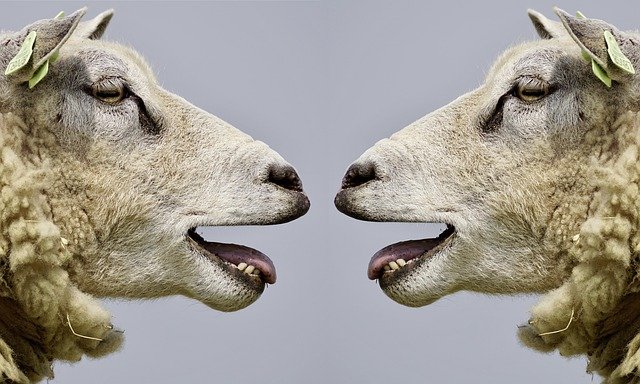
Stuffed animals and animal characters in books and movies can serve as vehicles for children to explore their feelings. Sometimes a child finds a trait in an animal easier to understand than the same trait in a person. “Aesop’s Fables” is a perfect example of stories starring animals that offer both entertainment and moral lessons, and we have long attributed human attributes to animals. Consider the expressions: “cunning as a fox,” or “as brave as a lion.”
“Go to the ant, you lazy one; see her ways and become wise.”
Mishlei 6:6.
“ANIMALS SPEAK: STORIES THAT HELP CHILDREN SHARE THEIR FEELINGS” (Feldheim Publishers 2015 ISB 978 68025-237-8) written by Dovi Weinroth and edited by Rabbi Chaim Walder, continues this use of animal stories to teach ethical and moral behavior in everyday life. Delightfully illustrated by Dror Adam, “Animals Speak” is 121 pages long and written primarily for ages three to eight.
“Animals Speak” contains nineteen stories that take place in mythical “Animal Land.” A variety of animals live in Animal Land, but they exist in a “human” world. These animals drive and go to school. They pay visits to their neighbors and play on sports teams. Human problems (and children’s problems) are presented through the dilemmas these animals face. Each story begins with a paragraph written for the parent that highlights the story’s intended message. Many of the stories build on previous ones; certain animal characters are repeated throughout. The animals work through some ethical and behavioral problems that are readily solved; others require more sophisticated social skills.
The animals in the book have distinct character traits. Not all are as kind as they should be. This variety of personalities, along with vitality powering the action of each story, will hold a child’s interest. The colorful illustrations cleverly highlight the liveliest parts of each story.
These nineteen stories teach lessons such as: the importance of loyalty to friends, the value of self-control, the difference between asking for help and taking advantage and the contagious nature of anger. There is a frightened duck who puts on a brave face when approached by an intimidating bear, a donkey who asks friends for help, sits back, and watches them do all the work and is surprised when they feel he is taking advantage of them. A strong owl is threatened when his scrawny friend grows stronger. A fox enters games only if he thinks he can win.
Most of these stories have useful messages, but a few might be perplexing to young readers. For example, a sheep helps an elderly neighbor by watering her flowers only to discover the flowers are plastic. The story is supposed to illustrate how we grow by giving, but the elderly neighbor’s mental confusion might be difficult for a child to understand. Another story tells of an ostrich who gets very upset when he is teased. He realizes the best way to stop the teasing is to act as if it does not bother him. The ostrich is thrilled when the annoying animals move on to tease someone else. A child might be baffled by the ostrich’s lack of concern for the next “victim.” Discussions between parent and child about the true messages of these stories would be helpful.
The stories were written primarily by Dovi Weinroth, and they expand upon the ideas of Rabbi Chaim Walder. Walder, who edited the book and wrote the paragraph that precedes each story, is one of the most well-known authors in Israel. He has written over two dozen books, mostly for children. Rabbi Walder was one of the first people to write a book geared for ultra-Orthodox children that was not an instructional text. He recognized the importance of all children being able to express their feelings, and his book, “Kids Speak,” contains true stories of Jewish children around the world and the problems they face. The book was so popular, Rabbi Walder went on to create a series of “Kids Speak” books which are still widely read. He is also a radio talk show host and columnist. Dovi Weinroth wrote “Animals Speak” so that children could have another way to explore moral actions and reactions in everyday settings.
Young readers will enjoy the fast-paced nature of the stories, and the alternate universe of Animal Land will draw them in. The choices these multi-faceted animal characters face will prompt a child to examine his own decision making and encourage him to appreciate the importance of treating everyone with kindness and dignity.
This article was published in The Jewish Advocate on September 23, 2016.