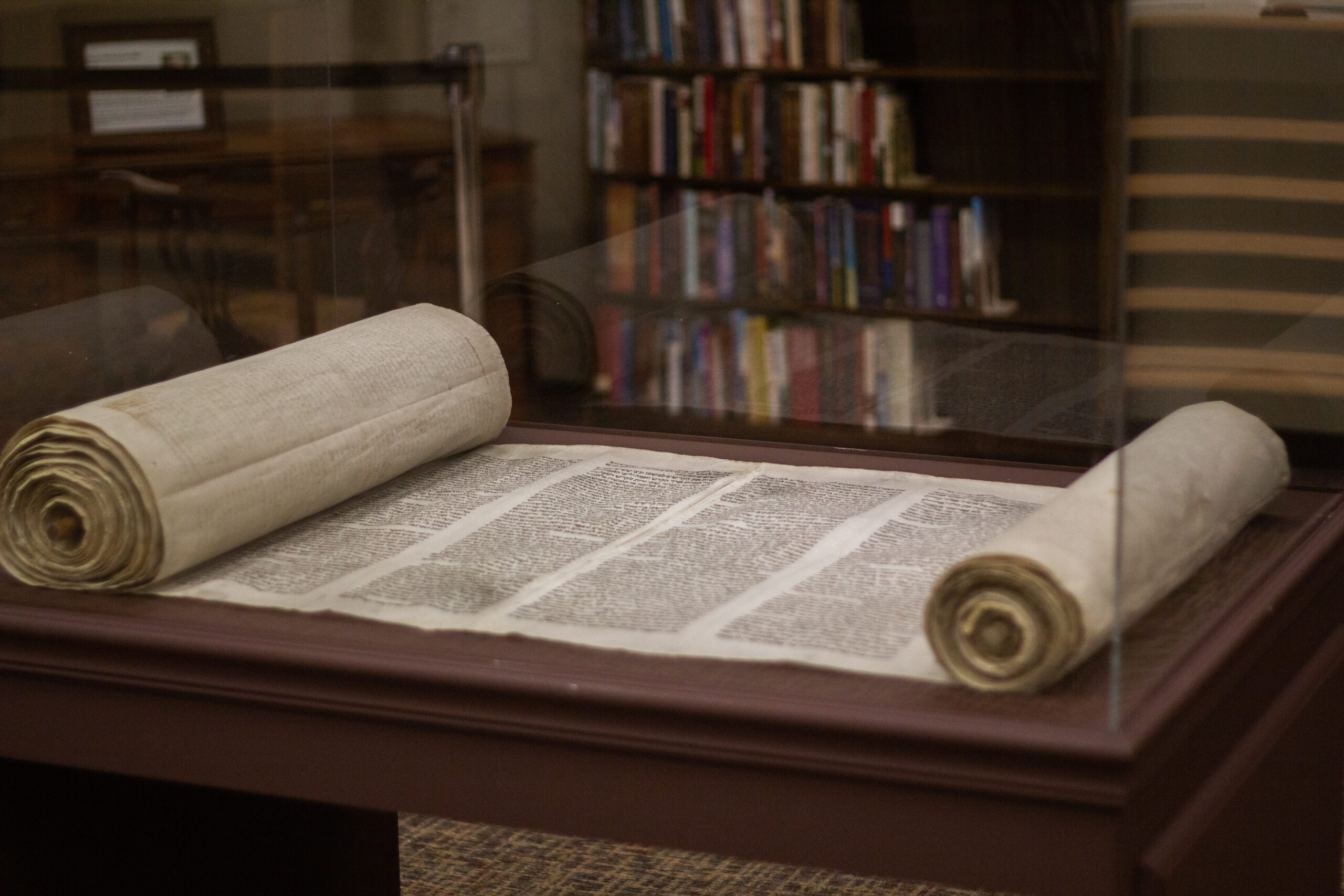
While Passover celebrates the Israelites’ freedom from physical bondage, Shavuot celebrates a spiritual freedom. Shavuot originally honored the wheat harvest in Israel; now it is customary to honor God’s gift of Torah. Long ago, the Israelites overslept like a bunch of weary teenagers and were late to the gathering at the base of Mount Sinai. This is why alongside a renewed commitment to learning Torah, many people celebrate Shavuot by pulling an “all nighter” to study Torah to make up for the Israelites’ tardiness.
How much did the Israelites understand or appreciate when they received the Torah? They were exhausted, thrilled to be freed from slavery, but terrified of the future. It was only when they dove into the Torah with their hearts and minds and made it a living entity, that they realized how lucky they were to be chosen by God to enter into a covenant with Him.
It is important to note Shavuot celebrates the giving of the Torah and not the receiving of it by the Israelites. The Torah might be the “gift that keeps on giving,” but it was only given once. God did His part by providing the gift; we must do our part by a continual commitment to Torah study and passing our Jewish values down to our children.
Parental advice is not as wise as the words contained in the Torah, nor is it a one-time gift. Imagine parents taking their newborn baby home from the hospital, placing him in his infant car seat on the kitchen table, reading a list of rules and expectations and then asking: “Are you okay with this, little buddy? Good. Our work is done. Now it’s up to you.”
The reality is parenting is not a one-shot deal. So, when does it stop? When our children turn 18? How about 21? And if parenting never ends, how does it change over time?
Small children depend upon us completely. We are needed 24/7 like doctors on call. We can’t go anywhere without a diaper bag, Tupperware filled with Cheerios and a stroller crammed into the trunk of our car. Life is a combination of constant planning and joyous spontaneity. If there is a problem, kids run to us to fix it.
Then our kids start to grow up. Their favorite activity is no longer a “date” with Mom at Papa Gino’s. We are downgraded from managers to managerial consultants. Our children now add their own interpretations to our teachings, argue back and sometimes tune us out completely. The years whiz by with a speed that grows exponentially. Letting go is bittersweet, and we never stop worrying. Hopefully we have provided our children with useful skills, an ability to make good choices and the right values so they can successfully function as adults. We are still needed, but the parenting role changes.
Boundaries spring up that we should respect. We must learn to become the best of listeners and trust our children as they once trusted us. We need to be patient and wait until our advice is actively sought. Then we can give our opinion without making the decision for them. This is how parenting continues. Our kids can still learn from us, but their learning style changes as they mature. It would be easier if our parental rulebook was set in stone and could be whipped out at any time. But the parent-child relationship is always in motion.
And so it is with the Torah. The lessons we take away from the Torah vary from one day to the next depending upon our maturity, experience, current situation and willingness of heart. Shavuot recognizes God’s gift and the fact that we are all works in progress. God showed his willingness to invest in us as a people; parents invest in their children in a different way. The Torah is designed to point us in the right direction. Parents must also try to send their children onto the right path, but we do not have God’s wisdom to give perfect advice on a single day. What parents do have is their experience, lessons learned from previous generations and our Jewish faith. I hope my children will become responsible, independent adults, but if they need me, I am there. And if they have internalized the example my husband and I have tried to set, of placing Jewish values into everyday living, then perhaps we haven’t done too badly.
This article was published in The Jewish Advocate on June 10, 2016.