THE WAGNER-ROGERS BILL
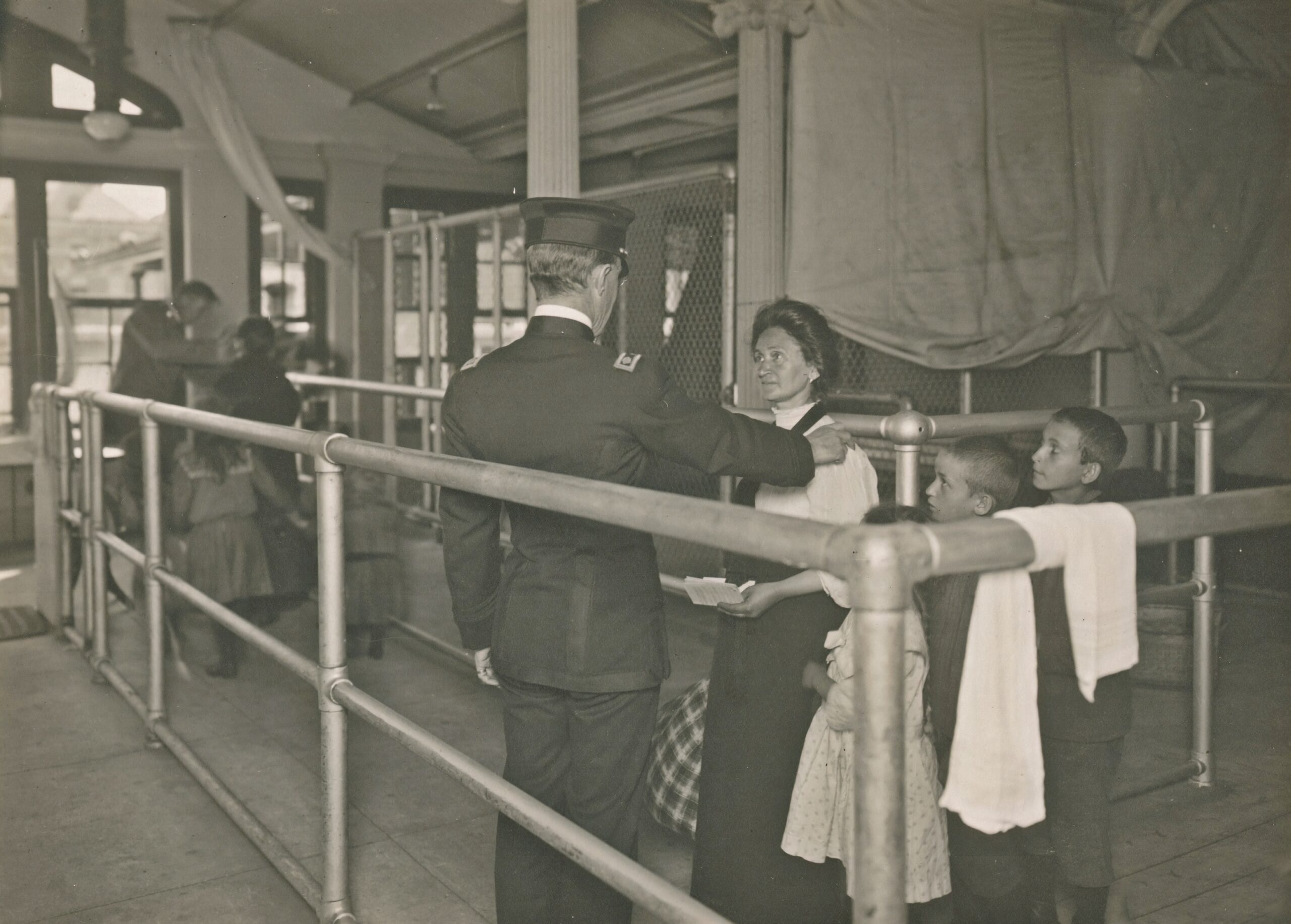
Years ago, I watched a news program with my grandmother, Nana Evelyn. The topic was immigration quotas and their effect on Soviet Jews wanting to come to the United States. “Not in my day,” Nana Evelyn said with a shake of her head. “The only talk of numbers had to do with passage money. My parents were always worrying. Where are we going to find the money? Can we get enough for everyone?” Her family scrimped and saved. They came to the United States in the early 1900s.
No quotas blocked their way.
But several decades later, in the 1920s, the United States passed laws limiting the numbers of immigrants. These laws also assigned quotas to specific countries. Many Americans feared new waves of immigrants would take their jobs. And quotas did more than protect the workforce. Quotas allowed “desirable” people in and kept “undesirable” people out. They preserved the status quo.
Because of European unrest in the 1930s, hundreds of thousands of people were desperate to come to the United States. Among the most desperate, were German Jews. Even if our government had distributed every available visa, we would have kept countless people out. The quotas for German-born citizens were too low.
Many Americans were unaware of — or ignored — Jewish persecution by The Third Reich. But extensive media coverage of Kristallnacht in 1938 made it harder to look away. Robert Wagner, a democratic senator from New York, and Edith Rogers, a republican representative from Massachusetts, sponsored two identical bills, known as “The Wagner-Rogers Bill.” They introduced the bill eighty years ago in February 1939. It allowed up to 20,000 German refugee children to enter our country over two years. Although the bill did not require the children to be Jewish, most Americans understood Jewish children would benefit.
Many interfaith groups supported The Wagner-Rogers Bill. Eleanor Roosevelt believed the bill would be the American counterpart to the British Kindertransport.
The Children’s Bureau — an agency within the United States Department of Labor — stated this influx of German children would not increase unemployment. The Children’s Bureau also clarified private donations would provide care. Nonetheless, groups like the American Legion and Daughters of the American Revolution argued the United States should focus its resources on American children. John Trevor, head of The American Coalition of Patriotic Societies, said, “Protect the youth of America from this foreign invasion.” According to Laura Delano Houghteling, wife of the Immigration Commissioner, “Twenty thousand charming children would all too soon grow into twenty thousand ugly adults.”
Senator Robert Reynolds from North Carolina was the most vocal opponent of The Wagner- Rogers Bill. He had already introduced multiple bills to limit immigration including one that banned all immigration for ten years. Reynolds suggested The Wagner- Rogers Bill could pass in exchange for a five-year ban on all immigration. Another Reynolds’ proposal was to include the 20,000 children in existing German quotas.
(Later in 1941, Reynolds spoke to the Senate. “I wish to say – and I say it without the slightest hesitation — that if I had my way about it at this hour, I would today build a wall about the United States so high and so secure that not a single alien or foreign refugee from any country upon the face of this earth could possible scale or ascent it.”)
Debate over The Wagner-Rogers Bill continued for months. Despite the tragic voyage of the St. Louis which took place that Spring, most Americans continued to support limits on German (and Austrian) immigration and opposed the bill.
The Wagner-Rogers Bill was dropped in the summer of 1939 due to lack of public support and fear the bill might cause increased immigration restriction. Most Americans, who had no desire to “waste” money on foreigners “flooding” our country, forgot about the 20,000 Jewish children.
However, Americans were not devoid of compassion. By May 1940, it seemed likely Germany would bomb Great Britain. In response, Great Britain formed an agency to evacuate British children to Canada and the United States. This evacuation plan expanded to include women and children from Great Britain and France. The number of people affected would far exceed 20,000. Although the intention was these refugees would return to their own countries once the war was over, they would still require government resources. In addition, some refugees might have stayed permanently through marriage or other means. But in a 1940 poll, more than 50% Americans supported this humanitarian effort. Protection of the workforce and national resources were suddenly non-issues.
Almost a thousand British children came to the United States. The program ended once Germany began bombing the transport ships.
When the ship carrying my grandmother’s family arrived in New York, Nana Evelyn remembered masses of people clinging to the ship railings, weeping, hugging, staring at the Statue of Liberty. Nana Evelyn asked her mother, “Who’s the tall lady with the funny hat?” No one on that ship could have predicted “Give Me Your Hungry, Tired and Poor” would become “Not so fast. And you? Not at all.”
Eighty years ago, we had the chance to save 20,000 Jewish children. But they were the wrong sort of children. And when the wrong sort is involved, numbers get in the way.
This article was published in The Jewish Advocate on March 15, 2019.